


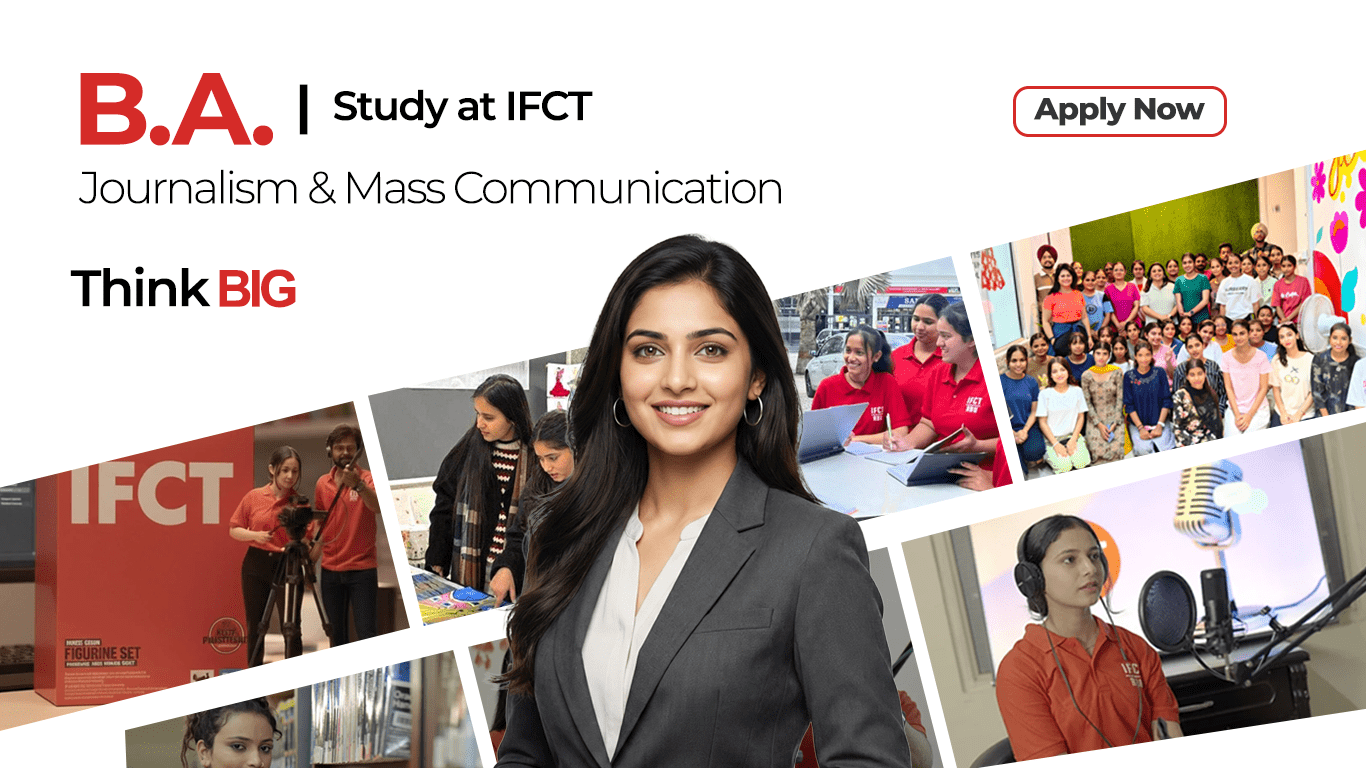
BA Mass Communication & Journalism Course in Chandigarh – IFCT
The BA Mass Communication and Journalism program at IFCT is designed for students who want to build careers in media, journalism, digital communication, and content creation. This undergraduate program focuses on developing strong communication skills, media knowledge, and practical training required for the modern media industry.
Students pursuing a degree in journalism and mass communication learn how to gather information, create news stories, and present content through different media platforms such as print, television, radio, and digital media. Journalism today plays a major role in delivering information to large audiences through traditional and online platforms.
At IFCT, students receive hands-on training in reporting, content writing, media production, and digital communication to prepare for careers in the fast-growing media and communication industry.
About BA Mass Communication
The BA Mass Communication program is typically a 3-year undergraduate degree that teaches students how media and communication work across various platforms including journalism, advertising, public relations, broadcasting, and digital media.
The course combines theoretical knowledge with practical training so students can understand how media organizations operate and how communication influences society.
Students gain knowledge in areas such as:
Journalism and news reporting
Media writing and editing
Television and radio production
Advertising and public relations
Digital media and social media communication
Media ethics and media law
This program prepares students for professional roles in media organizations, digital platforms, and communication agencies.
Why Study BA Journalism and Mass Communication at IFCT
IFCT offers industry-focused training for students interested in media and communication careers.
Key highlights of the program include:
Practical training in journalism and media production
Experienced faculty and industry mentors
Studio-based learning and media projects
Portfolio and content development guidance
Exposure to digital media platforms
UGC-recognized degree in collaboration with reputed universities
Students develop communication, storytelling, and media production skills required to succeed in modern journalism and media industries.
Course Details
Program
BA Mass Communication & Journalism
Duration
3 Years (6 Semesters)
Most BA journalism and mass communication degrees in India are structured as three-year undergraduate programs divided into six semesters.
Eligibility
Students who have completed 10+2 from a recognized board can apply for this program.
Location
Chandigarh / Mohali Campus
Subjects Covered in BA Mass Communication
The BA mass communication course includes subjects that help students understand media theory, communication techniques, and practical journalism skills.
Common subjects include:
Introduction to Journalism
Fundamentals of Mass Communication
Media Writing and Reporting
Photojournalism
Radio and Television Production
Advertising and Public Relations
Media Laws and Ethics
Digital Media and Social Media Communication
These subjects provide both theoretical knowledge and practical skills needed for careers in journalism and communication.
Career Opportunities After BA Mass Communication
A degree in journalism and mass communication opens up a wide range of career opportunities in media and communication industries.
Popular career options include:
Journalist or News Reporter
Content Writer or Editor
Television Anchor
Radio Jockey
Digital Media Specialist
Public Relations Executive
Advertising Professional
Social Media Manager
Graduates can work in news channels, newspapers, digital media platforms, advertising agencies, corporate communication departments, and media production houses.
Build a Career in Journalism and Media
The media industry continues to evolve with the growth of digital platforms, social media, and multimedia storytelling. Students pursuing BA mass communication develop skills in storytelling, content creation, and media production that are essential in today’s communication landscape.
At IFCT, students gain exposure to practical journalism training, digital media tools, and real-world media projects, helping them build successful careers in journalism and communication.
Apply Now
Frequently Asked Questions
What is BA Mass Communication?
BA Mass Communication is a 3-year undergraduate program that teaches journalism, media production, advertising, public relations, and digital communication skills.
What is a degree in journalism and mass communication?
A degree in journalism and mass communication is an academic program that trains students in reporting, media writing, broadcasting, and communication strategies used in the media industry.
Who can apply for BA mass communication?
Students who have completed 10+2 from any stream can apply for BA Mass Communication programs.
What skills are taught in BA journalism and mass communication?
Students learn reporting, news writing, editing, photography, video production, digital media communication, and storytelling skills.
What career options are available after BA mass communication?
Graduates can work as journalists, media professionals, content writers, social media managers, PR executives, and television or radio presenters.
BA Mass Communication Course in Chandigarh
Students interested in media, journalism, and digital communication often look for a BA Mass Communication course in Chandigarh that provides both academic knowledge and practical industry exposure. IFCT offers a professionally designed program that helps students understand the fast-evolving media landscape and develop strong communication skills required in modern journalism.
The BA Mass Communication and Journalism program at IFCT focuses on developing storytelling, reporting, and multimedia communication skills. Students learn how news and information are produced, edited, and delivered across different platforms including newspapers, television, radio, and digital media.
Through practical assignments, media projects, and creative workshops, students gain hands-on experience in content creation, media production, and digital storytelling. This practical approach helps students understand how the media industry operates and prepares them for real-world challenges.